

In 2026, the marketplace is noisier than ever. Whether you run a service-based agency, a manufacturing plant, or a professional firm, your biggest growth opportunity isn't found in your sales pipeline, it’s sitting right in your current customer list.
Customer churn: the rate at which customers stop doing business with you, is often called the "silent killer" of profitability. Why? Because it costs significantly more to find a new customer than it does to keep a current one. In fact, increasing customer retention by just 5% can increase profits by 25% to 95%.
At LoyaltyLoop, we’ve found that businesses often treat churn like a weather event: something that just happens to them. But the most successful companies in 2026 know that retention is a choice. Here are 5 effective strategies to reduce your customer churn rate and turn your existing clients into long-term partners.
1. Identify "At-Risk" Behaviors Early (Predictive Awareness)
You don’t need a complex algorithm to know when a relationship is cooling off. In any business, there are warning signs that a customer is leaning toward a competitor. Often, the loudest signal of an unhappy customer is silence.
When a customer stops asking questions, stops complaining, and stops engaging with your updates, they haven't "become easier to manage", they’ve likely checked out. In 2026, top-performing companies use predictive churn detection by monitoring behavioral trends.
How to Implement:
- Monitor Engagement Frequency: If a client who usually orders monthly hasn't placed an order in 45 days, that is a red flag.
- Track Response Times: Are they taking longer to approve quotes, proofs or return your calls?
- The "Support Spike": Conversely, a sudden surge in support requests or complaints can indicate a breaking point.
- Internal Alerts: Set up a simple system where your account managers are notified if a "Tier 1" client hasn't had a meaningful interaction in N days.
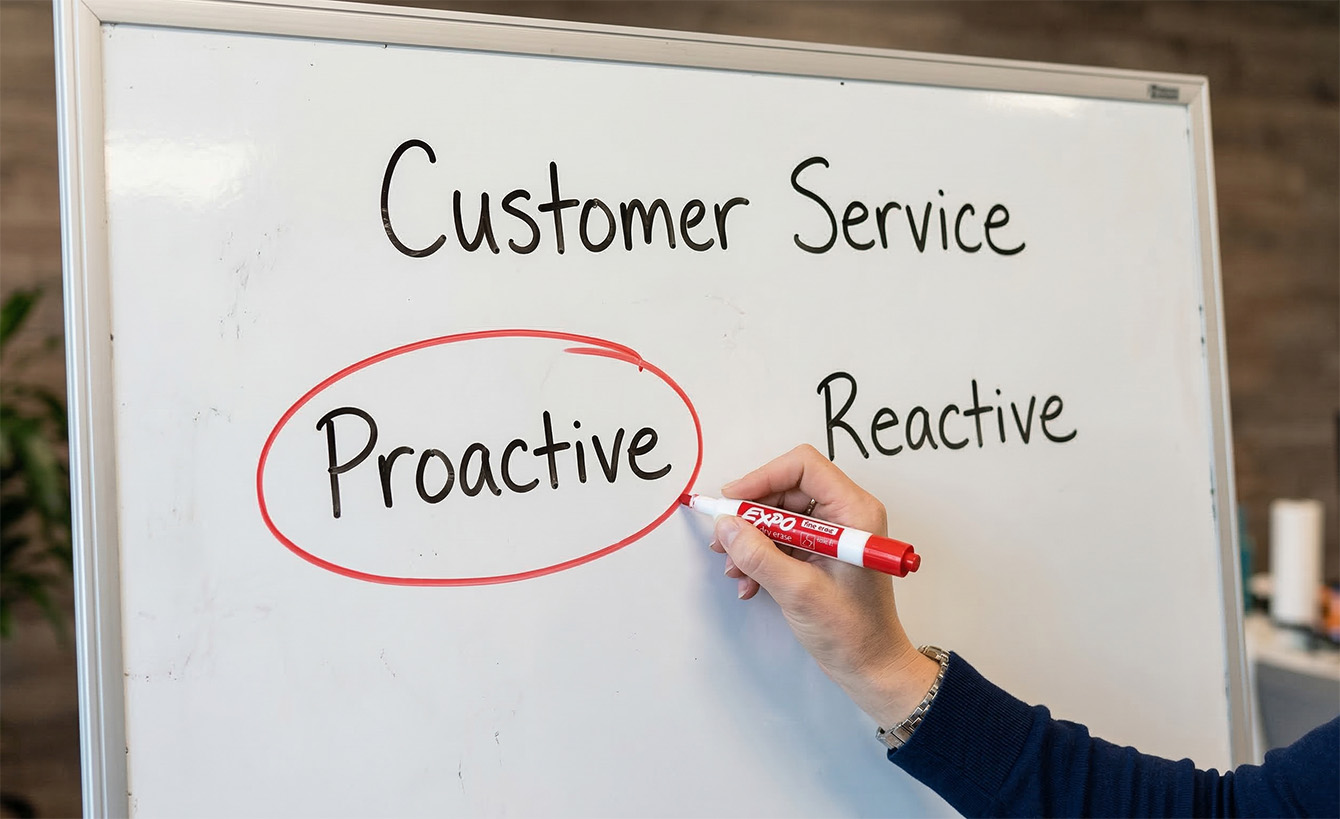
2. Master Proactive Customer Engagement (The "Check-In" Call)
Most businesses only communicate with their customers when there is a bill to pay or a problem to fix. This creates a purely transactional relationship. Proactive customer engagement flips this script by reaching out when everything is going right.
The goal is to move from being a "vendor" to a "trusted advisor." When you reach out proactively, you take the emotional burden off the customer. They don't have to find the time to tell you they're slightly unhappy; you’ve already created the space for that conversation.
How to Implement:
- The Non-Sales Touchpoint: Once a quarter, or at a frequency appropriate for your business, reach out with zero intention of selling. Simply say: "We value your partnership and wanted to see how the last project landed with your team. Is there anything we could adjust to make your life easier?"
- Value-Add Sharing: Send them a link to a news story or a piece of research that affects their industry. This proves you are thinking about their success, not just your invoice.
- Automated Personalization: Use your CRM to send automated (but highly personal) messages on their business anniversaries or after they hit a milestone with your company.
3. Build Real Customer Feedback Loops
The single most effective way to prevent churn is to listen and then prove that you heard. This is what we call customer feedback loops.
Many businesses send out a survey once a year, file the results in a folder, and never look at them again. In 2026, that’s a recipe for churn. A true feedback loop is a four-step process: Ask, Analyze, Act, and Close.
How to Implement:
- Timing is Everything: Don't just survey once a year. Send short, "pulse" surveys after key moments, like a project delivery or a service call.
- The 24-Hour Rule: If a customer leaves a negative comment, a manager should call them within one business day. This "service recovery" often turns an angry customer into a lifelong advocate because you showed you actually care.
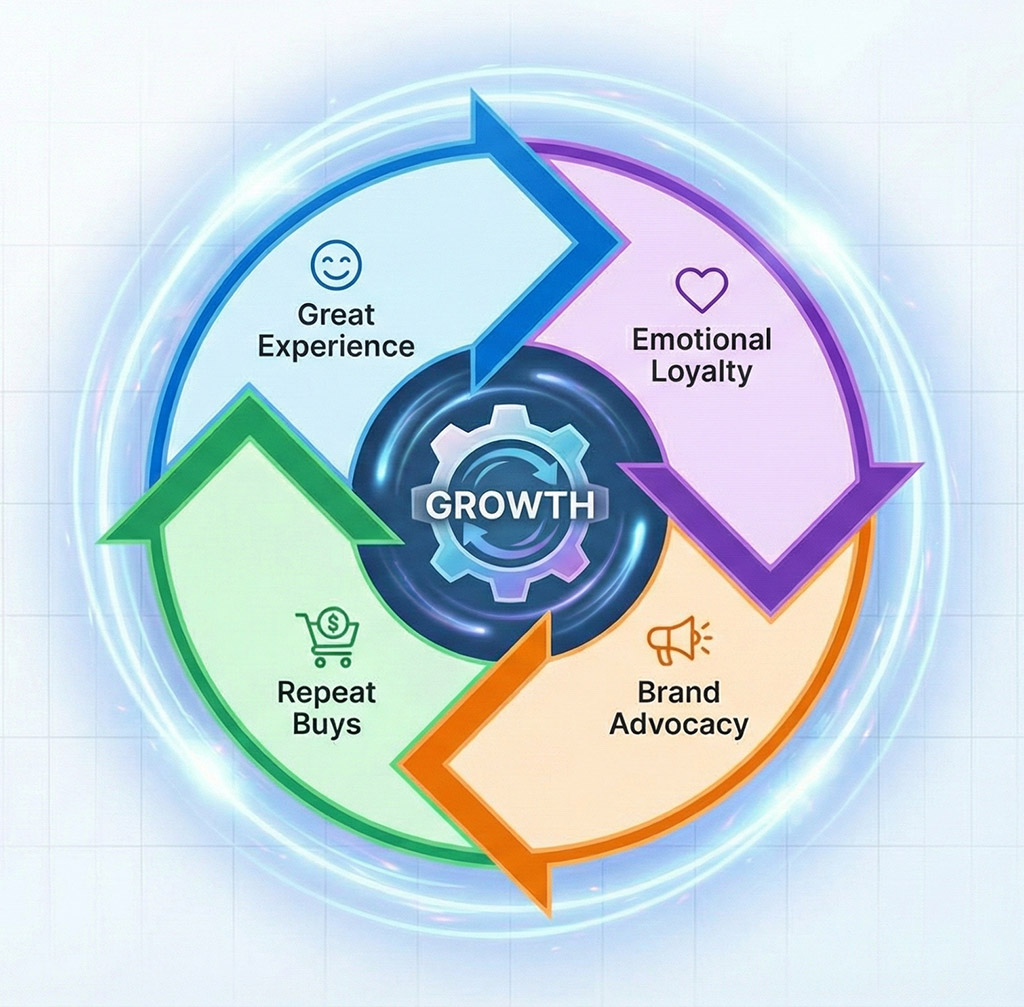
- Closing the Loop: This is the most forgotten step. If three customers suggest a change to your billing format, make the change and then email those three customers to tell them: "Because of your feedback, we've updated our system." That is how you build unbreakable loyalty.
4. Perfect the "New Client" Experience (Onboarding)
The first 30 to 90 days of a business relationship set the tone for the next five years. This is the "honeymoon phase," but it's also the period of highest anxiety for the customer. If a new client feels neglected or confused after they sign the contract, they will immediately experience "buyer’s remorse."
A polished onboarding process where you clearly outline what to expect, introduce the team, and deliver a "quick win", solidifies the customer's decision to choose you over the competition.
How to Implement:
- The Welcome Roadmap: Give every new client a one-page "What Happens Next" document. It should list who their contacts are, how to get help, and what the milestones for the first 90 days look like.
- Deliver a "Quick Win": Find one small thing you can finish or improve for them in the first week.
- The 30-Day Check-In: Specifically schedule a call 30 days in to ask: "Is this what you expected when you signed up?" Correcting a small misunderstanding here prevents a cancellation six months later.
5. Cultivate Emotional Loyalty over Convenience
In a world of "good enough" service, customers stay with businesses to which they feel a connection. If your only competitive advantage is being the "most convenient" or the "cheapest," you will lose those customers the moment someone more convenient or cheaper comes along.

Building emotional loyalty means being a partner, not just a vendor. It’s about the "Human Element." In the age of AI and automated bots, a genuine human connection is a premium service.
How to Implement:
- Transparency: If you make a mistake, own it immediately. Don't wait for them to find it. Proactive honesty builds more trust than a perfect track record ever could.
- Celebrate Their Wins: Did your client just win an award or open a new location? Send a note or a small gift.
- Community & Education: Host small webinars or "lunch and learns" that help your clients solve their business problems. When you help them grow, they will take you with them.
Summary: Closing the Leak
Reducing churn isn't about one big "save" at the end of a contract; it’s about a hundred small, proactive moments throughout the year. By focusing on customer feedback loops, proactive engagement, and a stellar onboarding experience, you ensure that your customers don't just stay, they become a marketing force of raving fans for your business and brand.
Is your business ready to turn feedback into a growth engine?
At LoyaltyLoop, we help businesses across all industries close the loop with their customers. Our platform makes it easy to spot at-risk clients, nurture your most loyal advocates, and drive consistent growth, all automatically.
Don't let your hard-earned customers slip through the cracks. Schedule a Demo today and see how simple it is to start reducing your churn rate and growing your bottom line.
Schedule a DemoFrequently Asked Questions (FAQs)
Q: Is some churn "healthy"?
A: Sometimes. Not every customer is a "good" fit for your business. If a client is constantly draining your resources, treating your staff poorly, or doesn't align with your values, losing them can actually improve your overall business health and allow you to focus on more profitable relationships.
Q: How can a small team manage proactive outreach without getting overwhelmed?
A: Automation is your friend. You don't have to manually type every check-in. Use platforms that trigger personalized surveys or reminders based on the customer’s schedule. This allows you to maintain a "high-touch" feel without needing a massive customer service department.
Q: What is the best metric to track for retention?
A: While Churn Rate tells you who left, the Net Promoter Score (NPS) tells you who is going to leave or who is going to refer you. We recommend tracking NPS alongside "Customer Effort Score", which measures how easy it is for a customer to get their problem solved.