

Nobody likes to be blindsided. You can find yourself unprepared when some unexpected piece of information comes at you that changes how you work or sheds light on an expensive error made months earlier, such as over-stocking or employee training mistakes. Information that shows itself out-of-the-blue is a symptom of having a Customer Experience Gap.
The Customer Experience Gap is defined by AnswerLab as:
"…a gap between a product experience for underrepresented users and dominant culture users."
In other words, it's the gap between how a business owner believes things to be versus how they really are. You may prepare for seasonal sales growth in one area of your business not realizing another sales category has been growing the entire time you've been focused on the first. Or, you may assume all your customers are having the same experience when they interact with you, but an entire segment isn't at all.
When your business is young, you know all of your customers and you know all the moving parts, but as you grow with each subsequent success, having that awareness of each customer's needs and experiences becomes impossible. You slowly shift to working at the macro level to ensure your team can handle each of your customer's needs. And this is where the gap widens.
This isn't a call to micro-manage, but instead a way of ensuring you effectively plan for a surprise-free future.
The very nature of LoyaltyLoop helps you close the customer experience gap, by ensuring your customers' experience is consistent when they interact with your business, such as making a purchase. The process of engaging your customers for ongoing feedback, arms you, your managers and staff with the knowledge of how your customers experience your business. In the past as your company was growing, you may have known these things inherently by managing every customer interaction. But in the normal course of developing your business, at some point you become reliant on others to manage the customer interactions. When this occurs you will create a customer experience gap, and you need tools like LoyaltyLoop to close the gap.
Here's a specific example. Let's say your customers' primary interaction is with your sales reps. If a customer is having a poor experience, the sales rep may not always know this. Why? Well, sometimes the sales rep could be part of the poor experience, and the customer is reluctant to tell him/her this. You can use LoyaltyLoop to view customer feedback by sales rep, to look for possible issues, by leveraging Feedback by Filter.
Feedback by Filter allows you to slice key customer experience (CX) metrics, like your NPS® score, by sales rep to help you see any customer experience variation. Since each rep is the primary interface with the customer, you may hope all customers have the same high level of experience, but may not. You may discover you have sales reps with customer 's who rate your company with lower NPS scores than other customers managed by other reps. Clearly these customer's experience is not as ideal as your other customers. This becomes an opportunity to find out what is happening and ensure customer experiences are consistent no matter who their rep is. This is an opportunity to make sure all of your reps are working for your customers according to established guidelines, or perhaps your best performing sales reps can provide educational assistance to those who don't perform as well.
Another way LoyaltyLoop can help reduce surprises, and close the customer experience gap, is by keeping you aware of what your customers want.
Visit the Feedback by Question section in your account. Have a look at the results of the 'Other Services' question. This question asks your customers which of your other products or services they may be interested in.
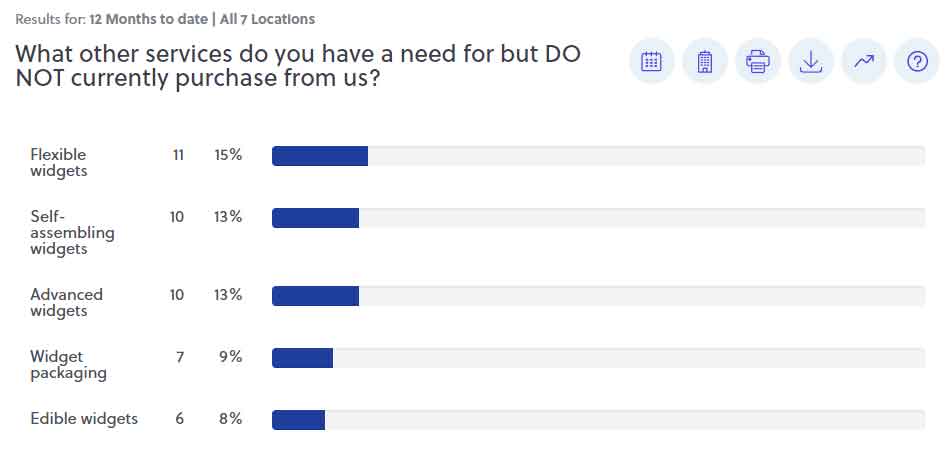
LoyaltyLoop - Feedback By Question - "Other Services Question" (Promoter Plan subscribers)
This chart can help you look for trends that you can prepare for. Adjust the date range to affect the data to see how items change over time, perhaps quarter by quarter or month by month. What was popular a year ago this month, versus what is popular this month, for example. Compare to what is selling now. Knowing how this chart compares to your expectations, can help you identify what product gaps need to be closed.
In your business, surprises are often not good, and discovering and closing a Customer Experience Gap can mean the difference in effective customer retention and effective budgeting. LoyaltyLoop provides feedback tools that allow you to seek out these gaps and close them up before surprises turn into lost customers and lost revenue.