
Best Practices for Customer Loyalty and Repeat Purchases in 2026

Welcome to 2026. The digital marketplace is noisier, faster, and more crowded than ever before. Customer acquisition costs have hit unprecedented highs, making the retention of existing customers not just a good idea, but a matter of survival.
Yet, many businesses are still operating with a 2015 mindset. They equate "loyalty" with a punch card, a points system, or a generic birthday discount email.
Here is the hard truth for 2026: You cannot buy true loyalty with points. If a customer is only loyal to your discounts, they will leave the moment a competitor offers a slightly better one.
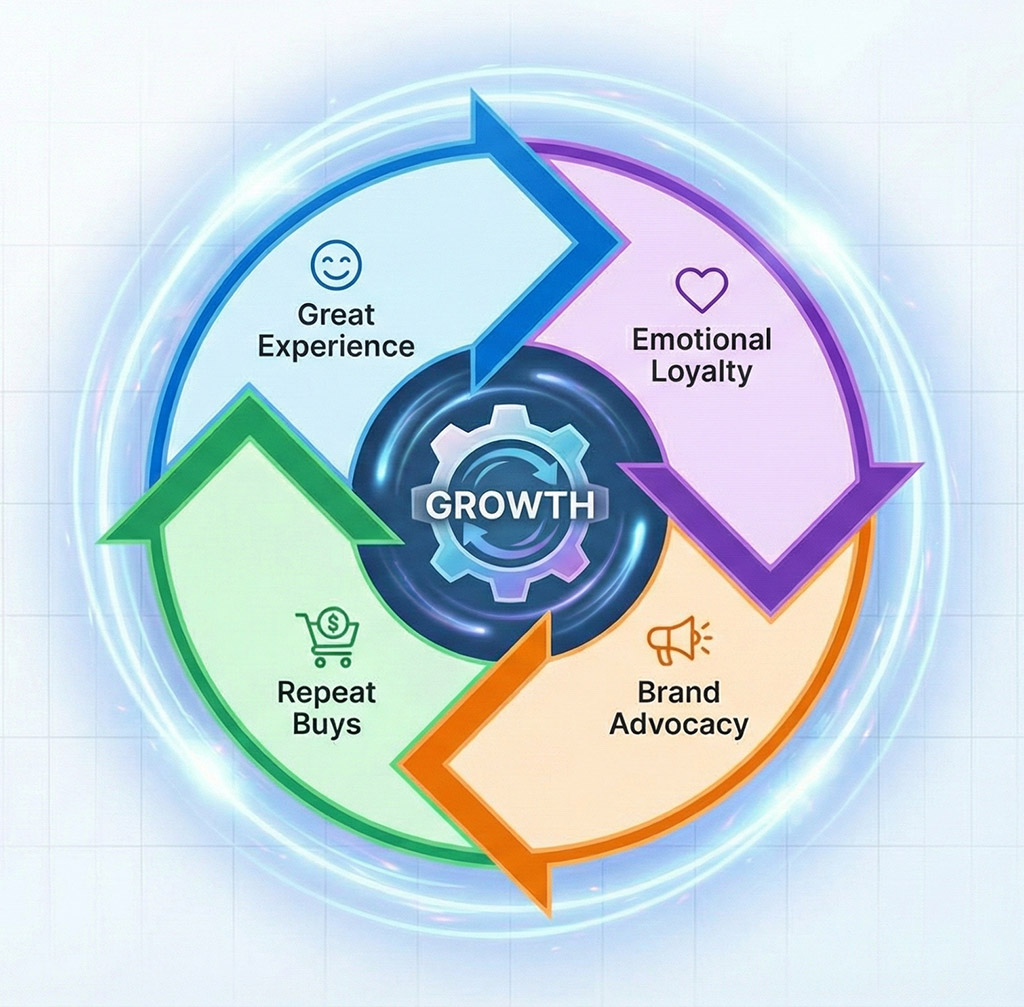
In today's landscape, the most successful businesses understand that loyalty isn't a program you run; it's an outcome of the experience you provide. It’s an emotional connection that turns customers into advocates and makes re-ordering an automatic reflex.
To thrive in this environment, we need to shift gears. Here are the best practices for building genuine customer loyalty strategies in 2026 that drive both brand awareness and consistent revenue.
Beyond the "Points" Program: Emotional vs. Transactional Loyalty
The first step in modernizing your strategy is understanding the profound difference between emotional vs. transactional loyalty.
Transactional loyalty is rational. It’s based on a calculation: "I shop here because I get 5% back." These customers are "mercenaries." They are here for the deal, not for you. While points programs have their place, they rarely build a defensible moat around your business.
Emotional loyalty is relational. It’s based on trust, shared values, and the feeling of being understood. These customers are "missionaries." They stay because they feel aligned with your brand purpose or because you consistently make their lives easier.
In 2026, best practice means moving up the hierarchy from transactional to emotional. How do you do that? By shifting your focus from "What can we give them to make them stay?" to "How can we make them feel so appreciated that they wouldn't dream of leaving?"
The Awareness Engine: Turning Customers into Marketers
When you achieve emotional loyalty, you unlock a powerful secondary benefit: organic brand awareness.
In an era where consumers are highly skeptical of paid advertising, the voice of a happy customer is the most potent marketing tool you have. Emotionally loyal customers don't just quietly buy from you; they loudly tell others about you.
They are the ones who:
- Leave glowing, detailed reviews on Google, Facebook and other sites.
- Post testimonials and user-generated content on social media.
- Refer colleagues and friends without being asked.
A core best practice is actively facilitating this "Promoter Effect." Don't just hope they share; give them the platform to do so. When a customer indicates high satisfaction (perhaps through a high Net Promoter Score), immediately guide them to share that sentiment publicly. Your loyal customers become your best and lowest cost acquisition channel.
The Profit Engine: Reducing Friction for Repeat Purchases
If brand awareness is the engine of growth, repeat purchases are the engine of profit.
The ultimate goal of loyalty is to reduce decision fatigue for your customer. When a customer needs what you sell, you want your brand to be the automatic, unconscious choice. You want to eliminate the phase where they open Google and search for alternatives.
How do you achieve this frictionless state? Through trust and relevance.
If a customer trusts that your product will work, that your service team will have their back if it doesn't, and that you value their business, the sales cycle for the second, third, and tenth purchase becomes nearly instant.
This is where hyper-personalization in marketing plays a massive role in 2026. We are way past "Dear [First Name]." Today, increasing repeat purchases means using data to anticipate needs. It means suggesting a refill before they run out, or offering an accessory that perfectly complements their last purchase. It’s showing them you know them, which builds the trust that greases the wheels of commerce.
The Core Strategy: Listening as a Loyalty Builder
You cannot build a relationship with someone if you never let them talk.
The foundation of all these strategies, emotional connection, personalization, and advocacy, is a robust system for listening.
In 2026, tracking the right customer retention metrics goes beyond looking at churn rates. It means actively seeking feedback through transactional and relational surveys and, crucially, acting on that feedback.
When a customer takes the time to give you advice or lodge a complaint, it is a critical moment of truth. If you ignore it, you prove the relationship is purely transactional. If you close the loop - if you reach out, acknowledge their input, and show them how it changed your business - you cement an emotional bond that is incredibly difficult for a competitor to break.
Conclusion
As we navigate 2026, remember that loyalty is no longer something you can buy with points. It is something you must earn through consistent, positive, and emotionally resonant experiences.
By shifting your focus from transactional programs to relationship building, you turn your customer base into a dual-threat engine: one that drives brand awareness through advocacy and secures highly profitable, frictionless repeat purchases.
The best place to start? Stop talking at your customers and start listening to them.
Turn "Listening" Into Your Competitive Advantage
As we have seen, the key to thriving in 2026 is moving from transactional points to emotional connections. LoyaltyLoop makes this transition effortless by automating exactly how you gather and act on customer feedback.
We help you identify your "missionaries", "close the loop" on service issues before they cause churn, and automatically drive your happy customers to leave the glowing reviews that fuel your awareness engine.
Don't just hope for loyalty, engineer it with LoyaltyLoop.
Schedule a quick demo with us today to see how easy it is to turn customer feedback into your biggest revenue driver.
Frequently Asked Questions (FAQs)
Q: What is the main difference between emotional and transactional loyalty?
A: Transactional loyalty is based on incentives like discounts or points, and customers stay for the price. Emotional loyalty is based on a relationship, trust, and shared values, and customers stay because they love the brand experience and feel understood.
Q: Why are customer retention metrics so important in 2026?
A: With customer acquisition costs hitting record highs, it is significantly more profitable to retain existing clients than to find new ones. Tracking retention metrics helps businesses identify at-risk customers and improve the lifetime value of their client base.
Q: How does listening to feedback improve repeat purchases?
A: Actively listening allows you to resolve issues before a customer leaves (reducing churn) and demonstrates that you value their opinion (building trust). This trust reduces friction, making the customer more likely to choose you automatically for their next purchase.