
Do Google Reviews Help Your SEO? (2026 Guide)

In the world of local search, there’s a question that never seems to go away: “Do Google reviews actually help my SEO, or are they just for show?”
If you asked this five years ago, the answer was a simple "yes." But in 2026, the answer is more nuanced. Google’s algorithms have become significantly more sophisticated, moving beyond simple star ratings to analyze the "signals" behind the feedback. Today, your Google reviews aren’t just a reflection of your reputation; they are a primary engine for your visibility.
1. The "Prominence" Factor: How Google Measures Your Popularity
Google’s local ranking algorithm is built on three pillars: Relevance, Distance, and Prominence. While you can’t control your distance from a searcher, you have massive control over your Prominence.
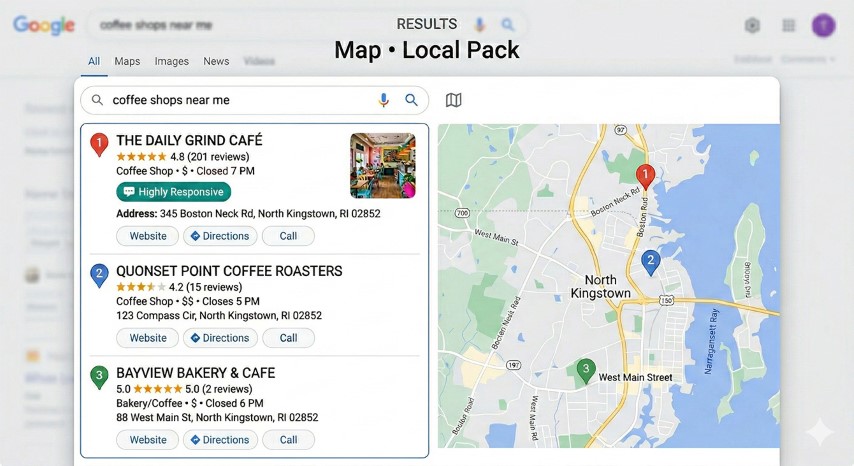
In 2026, Prominence is Google’s way of asking, "How much does the world trust this business?" Google looks at your review count and your average score as a proxy for this trust. A business with 250 reviews and a 4.9-star rating signals to Google that it is a safe, authoritative choice to show in the "Local Pack" (the top three map results). Without this prominence, even the most technically perfect website will struggle to break into those top spots.
Furthermore, Google uses reviews to verify the "offline" popularity of a business. In a world where AI-generated content is everywhere, real human feedback serves as an irreducible truth. When hundreds of people take the time to leave a review, Google views that as a powerful endorsement that your business is a pillar of the local community, deserving of a top-tier ranking.
2. Review Velocity and Recency: The End of "Static" SEO
One of the biggest shifts we've seen recently is the weight Google places on Review Velocity (how frequently you receive reviews) and Recency (how fresh they are).
In the past, a business could rest on 100 great reviews from three years ago. Today, that looks like a "dormant" business to Google. The algorithm now prioritizes active engagement. If your competitors are getting 2-3 fresh reviews every week, and you haven’t had one in a few months, your rankings will likely begin to dip. Google wants to provide searchers with businesses that are consistently delivering great experiences right now.
This means that a "burst" of reviews followed by silence can actually trigger a red flag in Google's spam filters. The goal is a steady, natural heartbeat of reviews. By maintaining a consistent velocity, you tell Google's algorithms that your business is thriving, relevant, and consistently satisfying customers in real-time.
3. User-Generated Content: Your Customers Are Your Best Copywriters
When a customer leaves a detailed review, they aren't just giving you a "thumbs up", they are providing Google with valuable, indexed text. This is User-Generated Content (UGC), and it’s SEO gold.
Google’s AI-driven search models now "read" reviews to understand the context of your business. If a customer writes, "Best commercial printing service in Chicago," or "They fixed my HVAC emergency on a Sunday," those specific phrases act as keywords. When someone else searches for "emergency HVAC Sunday," Google uses those reviews to verify that you are the right match for that specific intent.
This semantic understanding means that your reviews are essentially helping you rank for "long-tail" keywords that you might not even have on your website. Your customers are effectively doing your keyword research for you, describing your services in the exact language that future customers will use in their own search queries.
4. The Conversion Connection: CTR as a Ranking Signal
SEO isn’t just about being seen; it’s about being clicked. This is where Click-Through Rate (CTR) comes in.
When your business appears in search results with a high star rating and a "New" badge on recent reviews, users are more likely to click your listing over a competitor with a lower score. Google tracks these clicks. A high CTR tells Google that users find your listing helpful, which in turn reinforces your high ranking. It’s a virtuous cycle: better reviews lead to more clicks, and more clicks lead to better rankings.
Beyond the algorithm, reviews are the ultimate "social proof." In 2026, consumers are more skeptical than ever. A business listing without recent, authentic-looking reviews feels like a risk. By winning the "click" through a superior review profile, you are signaling to Google that you are the most relevant answer to the user's problem, which is the ultimate goal of any SEO strategy.
5. The Engagement Signal: Why Your Review Responses are SEO Fuel
In the early days of local search, responding to a review was considered a "polite extra." In 2026, it is a critical engagement signal that Google uses to determine how "managed" and "reliable" a business listing is. When you respond to a review, whether it’s a glowing five-star compliment or a constructive three-star critique, you are feeding the algorithm data.
The "Active Business" Factor:
Google’s AI-driven algorithms look for signs of life. A business profile that receives reviews but never responds to them can appear neglected. By maintaining a high response rate, you signal to Google that your business is attentive and operational. This "activity signal" contributes to your overall Prominence, as Google is more likely to recommend a business that is proven to be responsive to its customers.
Expanding Your Semantic Reach:
Every time you reply to a review, you have an opportunity to naturally reinforce your business’s core services. For example, instead of a simple "Thanks!", a strategic response might say: "Thanks for the feedback, Sarah! We’re so glad you enjoyed our custom commercial printing services here in Denver." This reinforces your location and your service category in a way that feels organic to both the reader and the search engine.
Building Trust Through the "Tough" Conversations:
Ironically, your responses to negative or mediocre reviews can be your strongest SEO and conversion assets. A thoughtful, professional response to a complaint shows potential customers that you stand behind your work. In 2026, searchers often filter specifically for "lowest rated" reviews to see how a business handles conflict. If they see a business that takes accountability and offers a resolution, the "trust signal" is often higher than if the profile had only perfect, unaddressed reviews.
Conclusion
The verdict is in: Google reviews are no longer a "nice-to-have". They are a non-negotiable pillar of your digital presence. But managing the constant flow of requests and monitoring your reputation can be a full-time job.
Stop leaving your SEO to chance. LoyaltyLoop automates the entire process, from gathering fresh feedback to encouraging your customers to post on Google. Our ReviewMatchSM technology even helps you connect those reviews back to your real customer data, ensuring you never miss an opportunity to boost your prominence.
Ready to dominate the Local Pack? Schedule a Demo of LoyaltyLoop today!
Schedule a DemoFrequently Asked Questions (FAQs)
Q: Does responding to reviews help my SEO?
A: Yes! While a reply doesn't "boost" your rank directly like a new review does, it signals to Google that your profile is actively managed. It also provides more text for Google to index and improves your click-through rate, a key secondary ranking factor.
Q: How often should I be getting new reviews?
A: Consistency is key. Rather than a "spike" of reviews once a year, Google prefers "Review Velocity" - a steady stream of feedback. For most local businesses, a couple of new reviews per week or month is a healthy baseline to maintain rankings.
Q: Can I offer a discount in exchange for a Google review?
A: Absolutely not. Google’s 2026 policies (and FTC guidelines) strictly prohibit incentivizing reviews. Doing so puts your entire Google Business Profile at risk of being removed from search results.
Q: Should I respond to five-star reviews that don't have any text?
A: Ideally, yes. Even a short "Thank you for the five-star rating!" shows Google and future customers that you are engaged and value every piece of feedback you receive.