
How to Measure NPS Accurately and Use It to Grow Your Business
The Mechanics of Loyalty: Mastering the NPS Formula
In the world of customer experience, there is one metric that stands above the rest as the gold standard for predicting business growth: the Net Promoter Score (NPS). But simply sending out a survey isn't enough. To truly unlock the power of customer loyalty, you need to understand the science behind the score and, more importantly, how to use it.
At LoyaltyLoop, we believe that feedback is the fuel for growth. Whether you are a small business owner or a marketing director, knowing how to measure NPS accurately is the first step toward building what we call "irrational loyalty" - that special bond where customers wouldn't dream of going anywhere else.
So, how do you get the math right?
The NPS Formula Explained
The Net Promoter Score calculation is deceptively simple, but precision is key. It starts with a single, powerful question:
"How likely is it that you would recommend our company/product/service to a friend or colleague?"
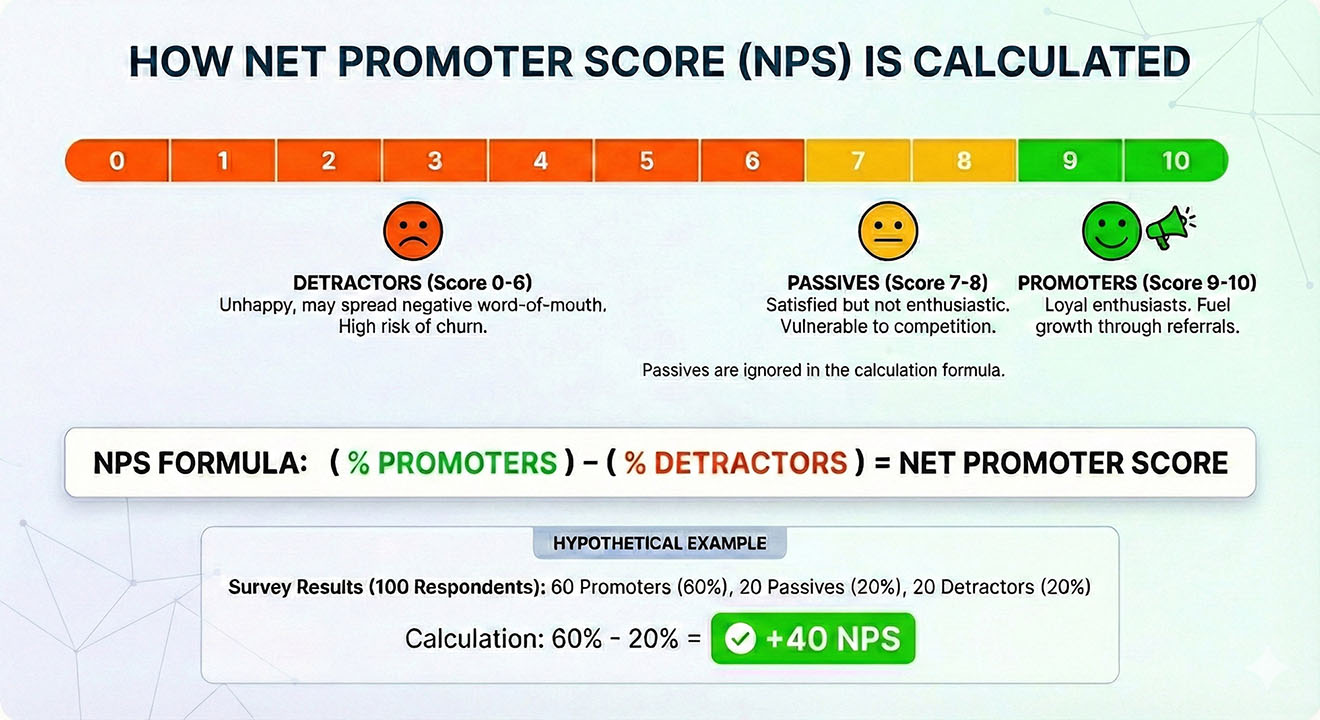
Respondents answer on a scale of 0 (Not at all likely) to 10 (Extremely likely). Based on their rating, customers are grouped into three distinct categories. To find your score, you use the following NPS formula:
NPS = % Promoters - % Detractors
The result is a whole number that can range anywhere from -100 (if everyone hates you) to +100 (if everyone loves you).
The Three Pillars of Feedback: Promoters, Passives, and Detractors
To perform accurate customer loyalty measurement, you must understand the psychology behind the three segments. These aren't just numbers; they represent three very different relationships with your business or brand.
1. Promoters (Score 9-10)
These are your superfans. They don't just like you; they love you. Promoters are enthusiastic, loyal, and likely to fuel your growth through referrals. They are the engine of your business.
2. Passives (Score 7-8)
Passives are "satisfied but unenthusiastic." They got what they paid for, but they aren't emotionally invested. They are vulnerable to competitive offers. If a competitor offers a slightly lower price, a Passive is likely to switch.
3. Detractors (Score 0-6)
Detractors are unhappy customers who can damage your brand and impede growth through negative word-of-mouth. However, at LoyaltyLoop, we see Detractors differently. We see them as an opportunity. A Detractor is simply a customer whose needs haven't been met, yet.
Accuracy Matters: NPS Survey Best Practices & Benchmarking
Getting the math right is step one. Getting the data right is step two. If you send surveys at the wrong time or to the wrong people, your score will be skewed. Here are a few NPS survey best practices to ensure accuracy:
- Timing is Everything: Don't wait months to ask for feedback. Send your survey shortly after a transaction or a key interaction while the experience is fresh.
- Keep it Simple: The beauty of NPS is its brevity. Don't burden your customers with a 20-question interrogation. A short, respectful survey yields higher response rates and more accurate data.
- Contextualize Your Score: It's natural to wonder, "Is my score good?" This is where NPS benchmarks by industry come in, if available. An NPS of 30 might be excellent in telecommunications but average in retail. Research benchmarks specific to your sector to set realistic goals.
From Metric to Movement: Closing the Loop to Drive Growth
This is the secret sauce. This is where most businesses fail, and where LoyaltyLoop clients succeed.
Calculating the score is just a diagnostic tool. To achieve NPS business growth, you must close the customer feedback loop. This means taking action on the feedback you receive.
Turning Detractors into Promoters
When a customer leaves a low score, an automated alert should trigger immediately. This gives you the chance to reach out, apologize, and fix the issue. We call this "service recovery." With LoyaltyLoop's services, this process becomes seamless. We automate real-time alerts to notify your team instantly whenever a negative review appears.
Activating Your Promoters
Don't ignore your happy customers! When someone gives you a 10, that is the perfect moment to ask for a Google review or a testimonial. Automated tools can help you capture this enthusiasm instantly, turning sentiment into public social proof.
Investigating the Passives
Passives are a goldmine of insight. They are telling you, "You're good, but not great." meaningful follow-up questions can help you uncover exactly what feature or service upgrade would push them into the Promoter category.
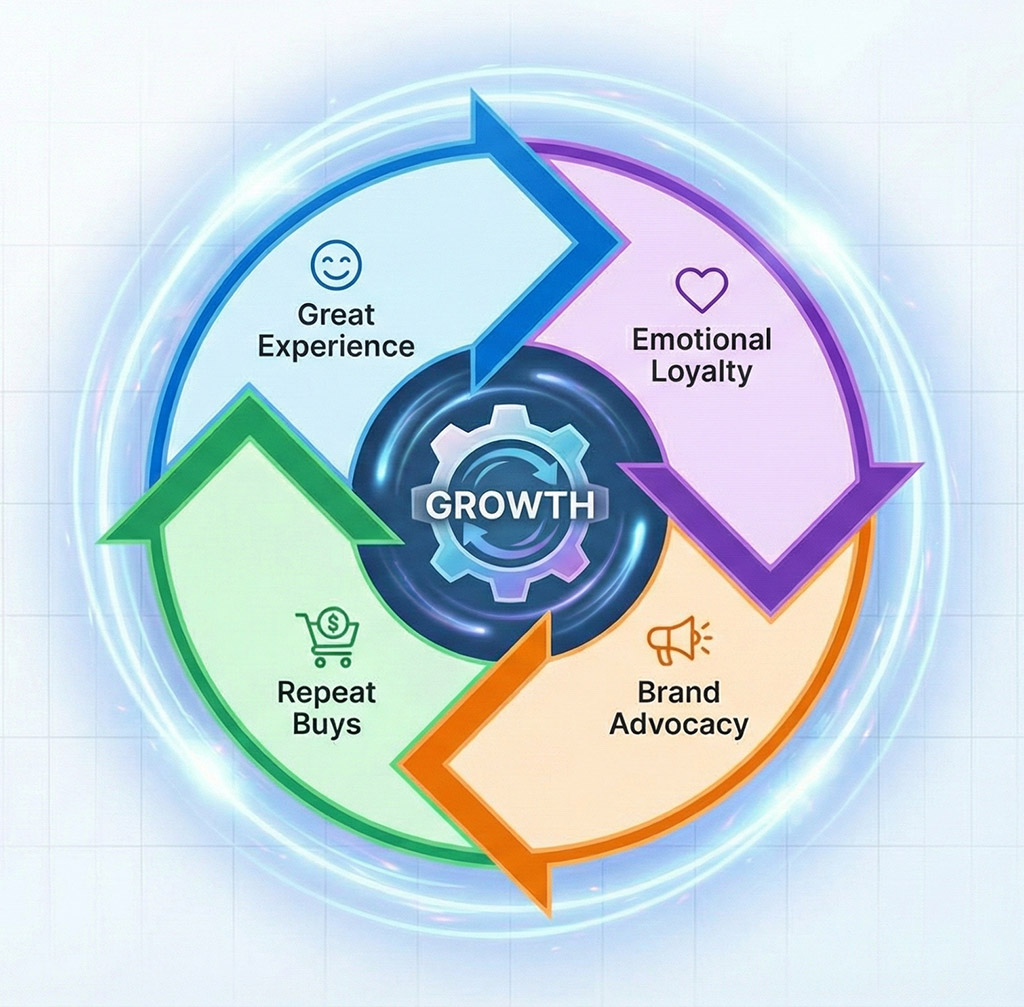
Conclusion: Growth is a Loop, Not a Line
NPS isn't just a score; it's a philosophy. It’s about listening to your customers and proving that you care. By measuring accurately and acting decisively, you build a self-sustaining cycle of loyalty that drives revenue, retention, and reputation.
At LoyaltyLoop, we automate this entire process for you. From sending the perfect survey at the perfect time to publishing your glowing testimonials to your website, and asking for those powerful Google reviews, we help you close the loop so you can focus on running your business.
Ready to see how your customers really feel? Schedule a quick demo with LoyaltyLoop today and start turning feedback into your biggest growth engine.
Schedule a DemoFrequently Asked Questions (FAQs)
Q: How often should I send NPS surveys?
A: For transactional businesses, it's best to send a survey immediately after a purchase or service call. For relationship-based businesses (like SaaS or B2B services), measuring quarterly or bi-annually is standard to track sentiment over time without causing survey fatigue.
Q: What is a "good" Net Promoter Score?
A: Generally, any score above 0 is "good" because it means you have more Promoters than Detractors. A score above 50 is excellent, and anything above 70 is world-class. However, it is always best to compare your score against NPS benchmarks by industry if such public data exists.
Q: Can a high NPS really grow my business?
A: Absolutely. High NPS correlates strongly with increased customer retention and organic referrals. By using strategies to close the customer feedback loop, you reduce churn and increase customer lifetime value (CLV).