
Negative is Positive! Wait, what?

Sometimes in life we find ourselves in situations where up is down, left is right, in is out, and black is gold and blue is white. In the world of customer feedback, the world gets even stranger. It is a world where negative is positive.
When we start working with a new client, it is fairly common to hear that they fear receiving negative feedback. This is particularly true if the client has never employed a regular process of gathering real customer feedback. This reaction is rational and natural. After all, no one really wants to hear bad news, or negative things about what we do and how we do them. It stings. In business, not only does it sting, but has the potential to de-motivate everyone in the company, unless properly managed.
That being said, negative feedback is supposed to sting, but it does not need to be a de-motivator. Quite the contrary, when managed correctly. Just like touching your hand to a flame, that stinging sensation tells you that you're doing something that isn't right, and if continued, will hurt. In business, that stinging feeling from negative customer feedback is telling you the same thing…your business, product, services or processes, is doing something that may not be right, and if ignored, may severely hurt your business. This is the entire point of gathering feedback.
Think about the customer who chooses to give you negative feedback. They are stopping what they're doing, and taking time to tell you why they're unhappy with your business. In some cases, it may be that they've been unhappy for a long time and finally hit their breaking point. More commonly, they are taking the time to tell you they want you to be better. When customers give negative feedback, they are telling you, and in some cases begging you, to do better for them. They are telling you they want to continue working with your business, if they can feel better about their experiences. This is how loyalty is formed. A customer giving negative feedback is almost asking if you want them to be loyal customers. If they didn't feel that way, most unhappy customers would not waste their time giving feedback in the first place. They would simply move on to a competitor, leaving you to wonder why sales have declined.
Now that we feel a little better about hearing this negative feedback, let's go to work for those customers, and welcome their loyalty. Filing that negative feedback on a computer someplace does nothing to improve. You must employ a repeatable process that gathers feedback, organizes it, understands it, shares it, and converts it into actions. A phrase to remember regarding feedback is "Celebrate the positives - Analyze the negatives". Ensure employees who can affect change for the issues identified are engaged and empowered to make changes. Make corrective actions plans, test the plans, verify they address the issues, and then implement.
A key part of turning feedback into actions, is having the proper company culture. You must make it a safe environment to receive negative feedback, even if the negative feedback is about a person. Your feedback loop does not supersede your HR policies, but you can engineer an open culture where employees are incented to embrace negative feedback in order to make positive change.
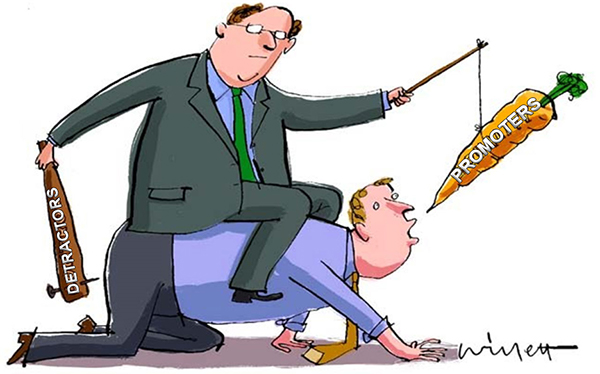
Another phrase we like to use when talking about building the right company culture for embracing customer feedback, is "Use more carrot than stick". Build a culture where employees and teams can openly discuss negative feedback without the threat of punishment or ridicule. Teams will be empowered to listen, learn and improve. Using too much stick will encourage the opposite behavior - teams will try to hide feedback, or conceal what actually happened, or game the system, which only serves to hurt the customer, the company and all employees.
Once this is understood, we can more easily see how negative is positive in the world of customer feedback. It is through this negative feedback that we learn the most. Within your company, it is probably commonly understood that if the business can improve, it could mean higher growth, higher sales, more job opportunities, faster career advancements, and so on. It is from this orientation that you need to continually educate teams and employees not to fear negative customer feedback, but to welcome it. Once they understand the relationship between acting on negative feedback to create positive outcomes (success) for the business, you will find it to be transformative.

Photo by Vitaly Gariev on Pexels
In fact, it is not uncommon for us to feel like therapists with new clients who fear negative feedback. We help them to understand the forces at play outlined in this post, and help them implement internal procedures that foster the correct attitudes and attention to customer feedback. For us, the best reward is when these clients experience the transformational change that a well-turned customer feedback loop brings to their company, employees, brand, and bottom line.