
NPS Survey Best Practices: Strategies for Maximizing Impact and Profit
For many businesses, the Net Promoter Score (NPS) is a familiar metric. It is the gold standard for measuring customer loyalty, represented by that simple, ubiquitous question: "How likely are you to recommend us to a friend or colleague?"
But here is the hard truth: A score, by itself, cannot grow your business.
Too many companies fall into the trap of treating NPS as a vanity metric. They collect the data, put a score on a dashboard, high-five over the "Promoters," and then move on. If this sounds familiar, you are leaving money on the table. To truly drive growth, you need to shift your mindset from merely measuring loyalty to actively managing it.
By implementing specific NPS survey best practices, you can transform your feedback program from a passive report into a revenue-generating engine. Let’s look at how to optimize your strategy to maximize both impact and profit.

Timing is Everything: Transactional vs. Relational NPS
One of the most common questions we hear is, "When should I send my survey?" The answer depends on what you are trying to learn. To build a robust strategy, you must understand the nuance of Transactional vs. Relational NPS.
Relational NPS
Relational surveys are designed to measure a customer’s overall perception of your brand over time. These are typically sent on a fixed schedule - quarterly or bi-annually - regardless of recent interactions. While useful for high-level health checks, they often suffer from "recency bias" and may not provide specific enough data to fix immediate operational issues.
Transactional NPS (The LoyaltyLoop Sweet Spot)
For most service-based businesses, the real magic happens with NPS survey timing and frequency tied to specific events. Transactional surveys are triggered immediately after a touchpoint, such as:
- Closing a support ticket.
- Completing a project milestone.
- Sending an invoice / processing a sale.
By automating surveys to go out immediately after these events, you capture feedback when the experience is fresh in the customer's mind. This leads to more accurate data and higher response rates. However, be mindful of frequency. If a customer buys from you weekly, do not survey them weekly. A solid NPS survey best practice is to set "throttle rules" (e.g., a customer only receives a survey once every 90 days) to prevent survey fatigue while ensuring you never miss a beat on customer sentiment.
The Art of the Ask: How to Increase NPS Response Rates
You cannot manage what you do not measure, and you cannot measure if nobody answers your emails. Low response rates are often the result of friction. If your customer has to take too many steps and click through five pages of questions, you have likely lost them.
Here is how to increase NPS response rates effectively:
1. Keep it Personal
Ensure your email or SMS requesting feedback reads like any other business communication you would send your customer. Avoid making emails that look like marketing emails, with graphics and other elements you personally do not include in your emails to customers. Write the email in the way you speak to customers, and include your actual email signature. The email should appear as if you had just clicked “compose” in your email client, and wrote an email to your customer. Include the link to your survey. While a link may seem like more friction for your customer, it is a more personal approach. At LoyaltyLoop, we find that this personal approach significantly boosts engagement because it respects the customer's relationship with you.
2. Mobile Optimization is Mandatory
More than half of all emails are opened on mobile devices. If your survey requires pinching and zooming, your response rate will plummet. Ensure your survey template is responsive, with large, tappable buttons that look just as good on an iPhone, a Pixel, and a tablet, as they do on a desktop monitor.
3. Keep it Short
The beauty of NPS is its simplicity. Resist the urge to add 20 follow-up questions. A standard NPS question followed by an open-ended "Why did you choose that score?" is often all you need to uncover deep insights without annoying your client.
The Money Step: Closing the NPS Feedback Loop
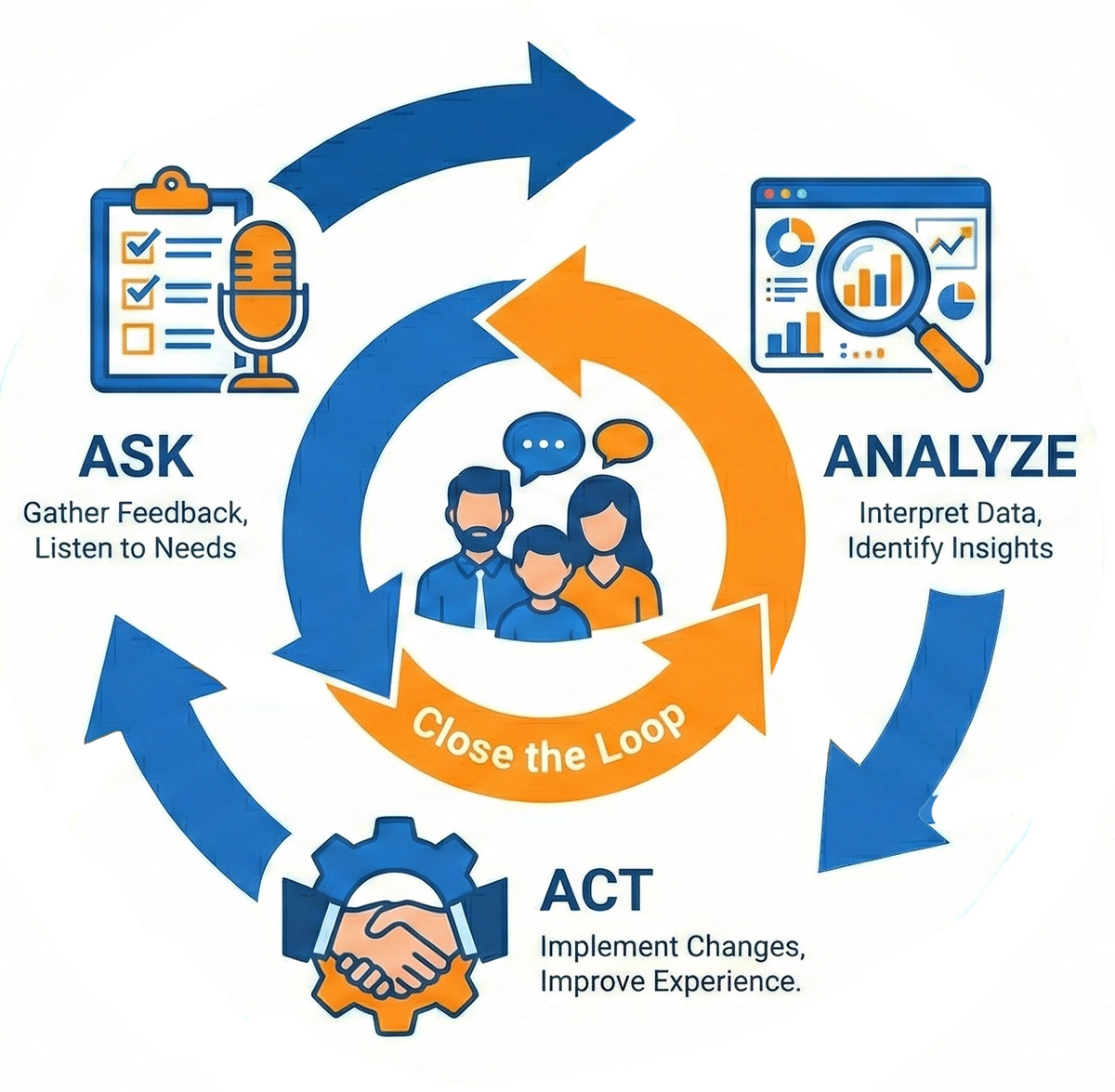
Collecting data is step one. Closing the NPS feedback loop is where you actually generate profit. This is the "action" phase of your Net Promoter Score strategies.
Your response to feedback should be segmented based on the score received:
1. The Detractors (Score 0-6): Service Recovery
When a customer leaves a low score, it is a cry for help. It is also an opportunity. Research shows that a customer whose complaint is resolved quickly often becomes more loyal than a customer who never had an issue in the first place.
- Strategy: Set up internal alerts so a manager is notified instantly when a Detractor score comes in.
- Action: Reach out personally within 24 hours. Don't defend, just listen and apologize.
- Profit Impact: Reducing churn. Every customer you save is revenue retained.
2. The Passives (Score 7-8): Education
These customers are satisfied but unenthusiastic. They are vulnerable to competitive offers.
- Strategy: Find out what held them back from a 9 or 10.
- Action: Use their feedback to identify gaps in your product or service delivery.
- Profit Impact: Increasing Customer Lifetime Value (CLV) by moving them toward loyalty.
3. The Promoters (Score 9-10): Activation
This is your hidden goldmine. Promoters have explicitly told you they love your service and would recommend you. So, let them!
- Strategy: Automate a follow-up request for Promoters to leave a public review on Google, Facebook, or other sites.
- Action: "Thank you for the 10! Since you enjoyed your experience, would you mind sharing that on Google Reviews? It helps us a lot."
- Profit Impact: New customer acquisition. Positive reviews are modern word-of-mouth marketing. By funneling your happiest customers to public review sites, you boost your local SEO and attract new leads automatically.
Conclusion
Maximizing the impact of your NPS program requires more than just software; it requires a strategy. By optimizing your timing, reducing friction to increase response rates, and aggressively closing the loop with both happy and unhappy customers, you turn a simple metric into a robust growth strategy.
Don't just ask the question. Act on the answer.
Next Steps
Ready to put these best practices into action without adding to your daily workload?
LoyaltyLoop makes it easy to capture customer sentiment by automating your Net Promoter Surveys, instantly saving your team time and money. But we provide more than just software, we provide a partnership. We work directly with you to train your team on survey best practices, ensuring you aren’t just collecting data, but driving real business growth.
Discover how we can help you build a better customer experience today.
See LoyaltyLoop in Action
Schedule a DemoFrequently Asked Questions (FAQs)
Q: When is the best time to send an NPS survey?
A: To get the most accurate feedback, timing is everything. For most service-based businesses, "Transactional NPS" works best. This means triggering a survey immediately after a specific touchpoint, like closing a support ticket, completing a project milestone, or sending an invoice—when the experience is still fresh in your customer's mind.
Q: How often should I survey the same customer?
A: While you want fresh data, you must avoid survey fatigue. Even if a customer buys from you weekly, you shouldn't survey them every week. A best practice is to implement "throttle rules" (for example, limiting surveys to once every 90 days per customer) to respect their time while still monitoring sentiment.
Q: What is the most effective way to increase survey response rates?
A: Reduce friction and keep it personal. Avoid "marketing-style" emails with heavy graphics; instead, send a simple, personal text-based email that looks like it came directly from you. Additionally, ensure your survey is fully optimized for mobile devices and keep the survey itself short, ideally just the NPS question and one follow-up "Why?" question.
Q: What should I do when I receive a low score (Detractor)?
A: Treat a low score (0-6) as an urgent opportunity for service recovery. Set up internal alerts so you are notified instantly, and reach out personally within 24 hours. Don't defend your position; simply listen and apologize. Resolving a complaint quickly can often turn an unhappy customer into one of your most loyal advocates.
Q: How can I use positive feedback (Promoters) to grow my business?
A: Don't just high-five over a score of 9 or 10 - activate it! Automate a follow-up request for these "Promoters" to leave a public review on Google or Facebook. This turns their private praise into public social proof, helping boost your local SEO and attract new customers.