
Unlocking Loyalty: 5 Key Elements That Make a Great Customer Experience

In today’s hyper-competitive marketplace, price and product features are no longer the sole differentiators for a business. The true battleground has shifted. Today, the companies that win are the ones that master Customer Experience (CX).
But "experience" is a broad term. Is it a friendly smile? A fast website? A personalized email? It is all of those things and more. When business leaders ask us, "Exactly what makes a great customer experience?", the answer lies in how a customer feels about your brand across every single touchpoint.
A great experience transforms a one-time buyer into a lifelong advocate. It lowers churn and boosts revenue. To help you build a strategy that lasts, we have identified the five key elements that are essential for driving superior CX and robust customer retention strategies.
1. Hyper-Personalization: Treating Customers as Individuals
Gone are the days when a generic "Dear Valued Customer" email was acceptable. Today’s consumers expect brands to know them, remember them, and anticipate their needs.
Personalization is about using data intelligently to provide relevant value. It’s the difference between a bank sending an offer for a credit card you already have versus sending a tip on how to maximize the rewards points you earned last month.
When you leverage purchase history and behavioral data, you make the customer feel seen. This emotional resonance is critical. A study by McKinsey & Company found that 71% of consumers expect companies to deliver personalized interactions, and 76% get frustrated when this doesn’t happen.
Personalization is about using data intelligently to provide relevant value. It’s what sets apart a generic credit card offer from a timely tip on how to make the most of the rewards you’ve already earned. With LoyaltyLoop, you can include multiple personalization fields in survey requests, helping your customers feel recognized and appreciated.
Key Takeaway: meaningful personalization shows you value the relationship, not just the transaction.
2. Seamless Omnichannel Support: Consistency is Key
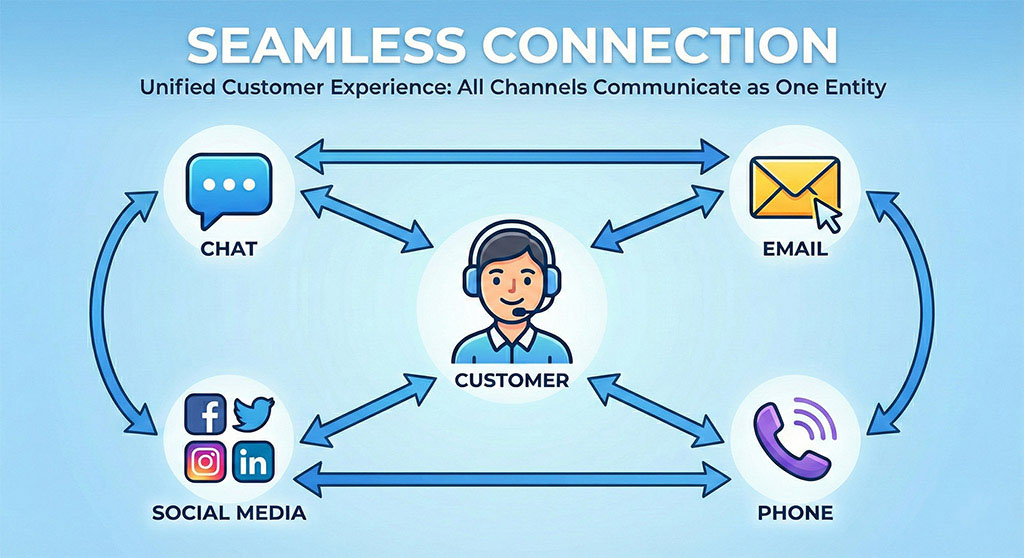
Customers do not view your business as separate departments (sales, support, billing); they view you as one entity. However, nothing kills Customer Satisfaction (CSAT) faster than a disjointed experience where a customer has to repeat their problem to three different agents.
Omnichannel support means providing a consistent experience whether the customer reaches out via email, live chat, social media, or phone. If a customer starts a conversation via a chatbot on your website, your support team should be able to pick up that thread seamlessly over the phone, without forcing the customer to start from square one.
Consistency builds trust. When your channels “talk” to each other, you reduce friction and signal to the customer that you are organized and attentive.
3. Frictionless Interactions: Reducing Customer Effort
While "delighting" customers with over-the-top gestures is nice, most customers simply want their problems solved quickly and easily. This is where the Customer Effort Score (CES) comes into play.
High-effort experiences, like navigating a confusing website, waiting on hold, or filling out redundant forms, drive disloyalty. A great customer experience is defined by how easy you make it for the customer to give you money or get support.

To improve this element:
- Audit your checkout or sign-up process.
- Ensure your FAQs are up-to-date.
- Empower frontline employees to solve problems without needing manager approval.
- Pretend you are a customer, and experience your business from their POV
The easier you are to do business with, the longer your customers will stay.
4. The Closed Feedback Loop: Listening and Acting
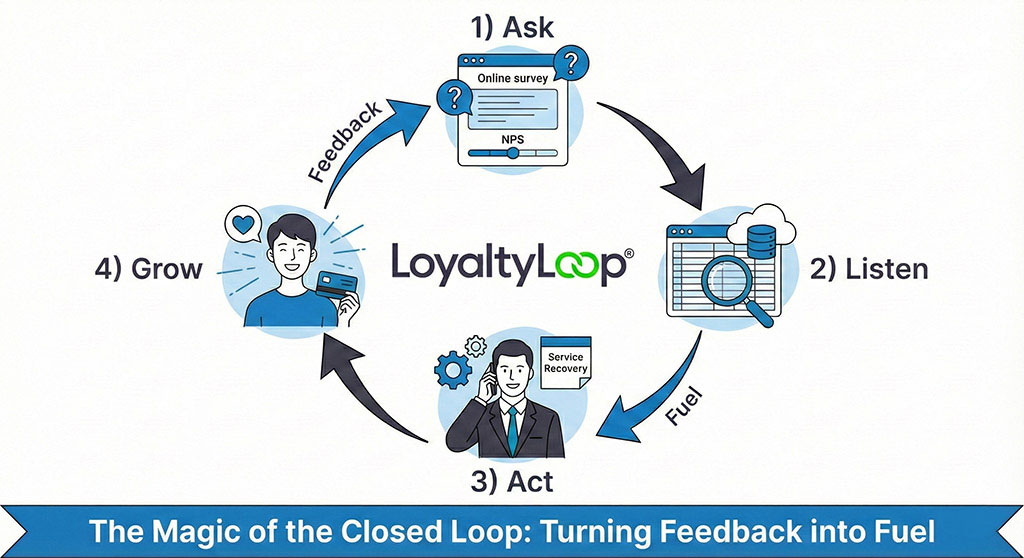
Perhaps the most critical element of all is the Customer Feedback Loop. Many companies are great at asking for feedback using metrics like the Net Promoter Score (NPS), but they fail at the most important part: acting on it.
Collecting data is passive; closing the loop is active.
When a customer leaves a negative review or a low NPS score (a "Detractor"), what happens next? In a great CX model, an automated alert triggers a follow-up action. A manager reaches out to apologize, understand the issue, and fix it.
This process is known as "service recovery." When you successfully fix a problem for a dissatisfied customer, they often become more loyal than a customer who never had a problem in the first place. This is the magic of the closed loop, it turns feedback into fuel for growth.
5. Emotional Connection and Empathy
Finally, never underestimate the human element. Technology and automation are powerful tools for efficiency, but empathy is the driver of connection.
Great CX is empathetic. It understands that behind every support ticket is a person who might be stressed, confused, or under pressure. Training your team on soft skills - active listening, patience, and genuine care - can diffuse tense situations and build lasting rapport.
When customers feel that a brand cares about their well-being, they develop an emotional connection that transcends price and product features.
Conclusion
So, what makes a great customer experience? It is the intersection of personalization, seamless support, low effort, emotional connection, and, most importantly, a responsive feedback loop.
You cannot improve what you do not measure, and you cannot retain customers if you do not listen to them.
At LoyaltyLoop, we help businesses automate the customer feedback process. We make it easy to gather NPS, CSAT, and testimonials, and instantly alert your team to follow up with customers who need attention. Don't just collect data, close the loop and watch your business grow.
Schedule a quick demo with LoyaltyLoop today to see how we can help you turn customer feedback into your competitive advantage.
Schedule a DemoFrequently Asked Questions (FAQs)
Q: What is the difference between CSAT and NPS?
A: Customer Satisfaction (CSAT) measures a customer's happiness with a specific interaction or transaction (like a support ticket). Net Promoter Score (NPS) measures overall customer loyalty and the likelihood of a customer recommending your brand to others. Both are vital for a holistic view of CX.
Q: How does the Customer Feedback Loop improve retention?
A: The Customer Feedback Loop ensures that customer input doesn't go into a black hole. By responding to feedback, especially negative feedback, you demonstrate that you value the customer. This proactive resolution often prevents churn and turns unhappy customers into loyal advocates.
Q: Why is reducing customer effort important?
A: Studies show that "ease of use" is a better predictor of customer loyalty than "delighting" the customer. By lowering your Customer Effort Score (CES), you remove barriers to purchase and support, making it more likely that customers will return.